Product development from one source
Clarify the problem and the requirements, concept and feasibility, design with CAD and FEM, prototypes from our own 3D printing, and iterations through to the pre-series prototype.

Services · Design contractor · Filderstadt · Stuttgart region
As a design contractor in Filderstadt and the Stuttgart region we take on the mechanical development of technical products: idea, concept, CAD design and 3D-printed prototypes from our own workshop — through to a state that works and can be manufactured. In two steps, both at a fixed price. What the fixed prices include is set out below. A longer account of cost and process is on the blog, in German: product development at a fixed price.
Idea · CAD · Proto
Product design and technical development belong together: form, function and manufacture are considered from the start.
Clarify the problem and the requirements, concept and feasibility, design with CAD and FEM, prototypes from our own 3D printing, and iterations through to the pre-series prototype.
For anyone with a product idea and no development department of their own — and for companies that want a new product as a working prototype, quickly.
A prototype that works, plus manufacturing drawings, a bill of materials and CAD data (PDF, DWG, STEP) for manufacturers and suppliers.
Process
One process, one point of contact: concept, design and prototypes from a single source — the 3D-printed prototypes are made in our own workshop in Filderstadt.
Clarify the problem, the use and the requirements — what must the product do, for whom, and under which conditions?
Sketch ways to solve it, and assess feasibility and risks. Result: a requirements specification, a concept, and a binding fixed-price quote for phase 2.
Design in Onshape, reviewed via a link in the browser — no CAD license of your own. FEM analysis where the design needs it.
Working prototypes from our own 3D printing in Filderstadt. Test, measure, improve — loop by loop.
A state that works and can be manufactured: with drawings, a bill of materials and STEP data for manufacturers and suppliers.
Engagement model & prices
Phase 1 settles, at a fixed price, whether and how your idea works — and ends with a binding fixed-price quote for phase 2. You know what development through to the pre-series prototype costs before you commission it.
Clarify whether and how your idea works — before any design work starts.
1,450 €
Fixed price incl. 19% VATequivalent to 1,218.49 € netDuration about 3–4 weeksResult
From the concept to a prototype that works and can be manufactured. The fixed price is set after phase 1.
from about5,000 €
net plus VAT for companiesfrom about 5,950 € incl. 19% VAT for private individualsPayment in three installments: start · first prototype · acceptance (private individuals: first installment after the first CAD status)Included
Paying for phase 2 · two paths
about 8,700 € net, including material · about 12 weeksabout 10,353 € incl. 19% VAT
You pay the agreed fixed price in three installments: at the start, after the first prototype, and on acceptance (private individuals: the first installment after the first CAD status).
Up front you pay only material and external costs. In return, KANID receives a time-limited share of revenue after market launch — agreed individually and in writing after we have reviewed the project. For companies and founders who will market the product commercially.
Extra work and further revision loops only with your prior approval — 120 € per hour net plus VAT for companies, 142.80 € per hour incl. 19% VAT for private individuals.
Phase 1: fixed price 1,450 € incl. 19% VAT (1,218.49 € net). Phase 2: a fixed price, quoted as binding after phase 1; guide value from about 5,000 € net plus 19% VAT for companies, or from about 5,950 € incl. 19% VAT for private individuals. Partner model (for companies and founders who will market the product commercially): terms after a review of the project, individual and in writing.
What we develop for ourselves follows the same path as your project: from the problem through concept, CAD and a 3D-printed prototype to the finished product. Sold in the KANID Factory shop.
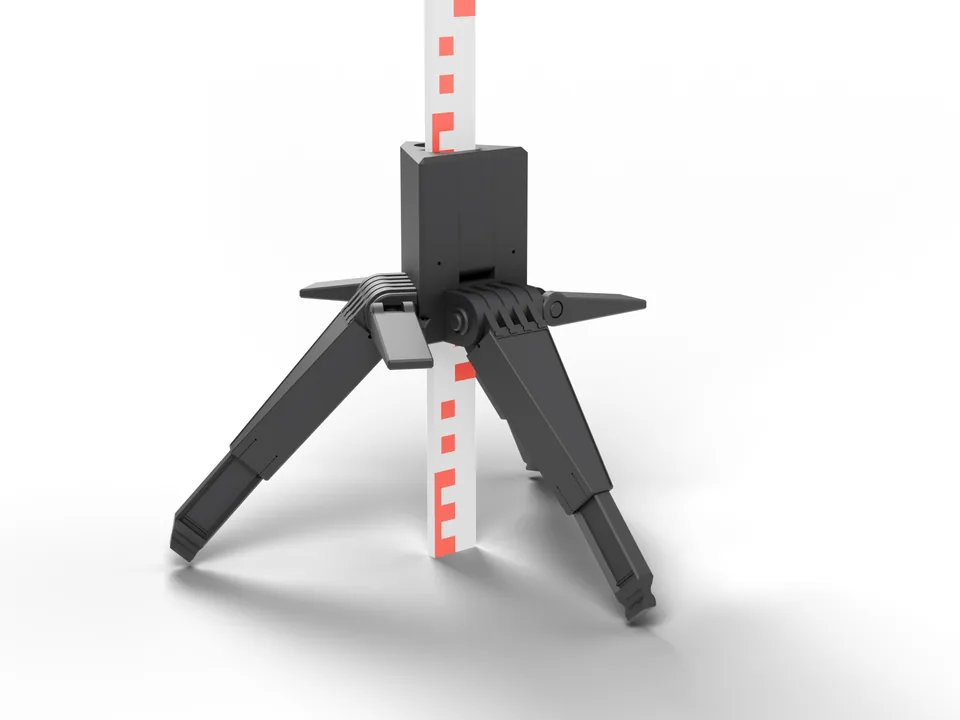
Iteration with users
A further development of the SoloMeter for motor-vehicle assessors, developed at the request of an assessor and tested together: three extendable feet for uneven ground, and a built-in vial. The vial shows whether the surveyor’s folding rule (German: Geometer-Maßstab) is plumb. It does not level the rule by itself. The rule, 30 × 6.5 mm, fits without an adapter. An optional adapter also takes a tradesman’s folding rule (about 2 m, 16 × 3 mm).
Field feedback → CAD → prototype → series
View product →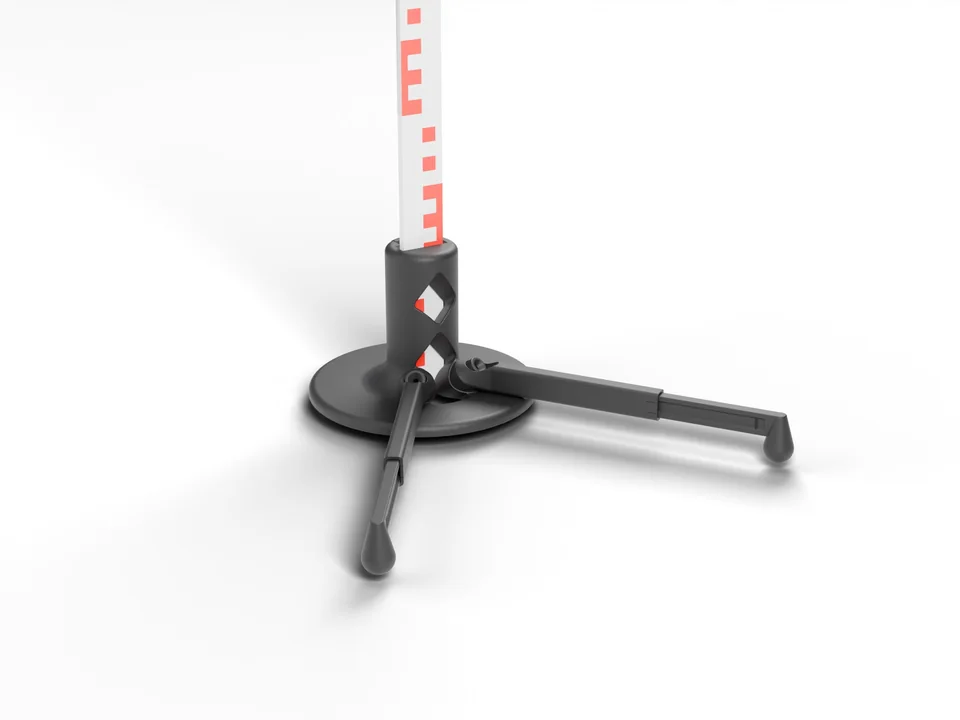
Damage documentation
A holder for motor-vehicle assessors. SoloMeter holds a surveyor’s folding rule (German: Geometer-Maßstab, usually just called a folding rule) upright on its own, so no hand has to hold it, for photo documentation, for example after a collision. The rule (30 × 6.5 mm) fits without an adapter. An optional adapter also takes tradesman’s folding rules (about 2 m, 16 × 3 mm). The first version: the same seat, two extendable feet, no vial.
Practical problem → concept → prototype → series
View product →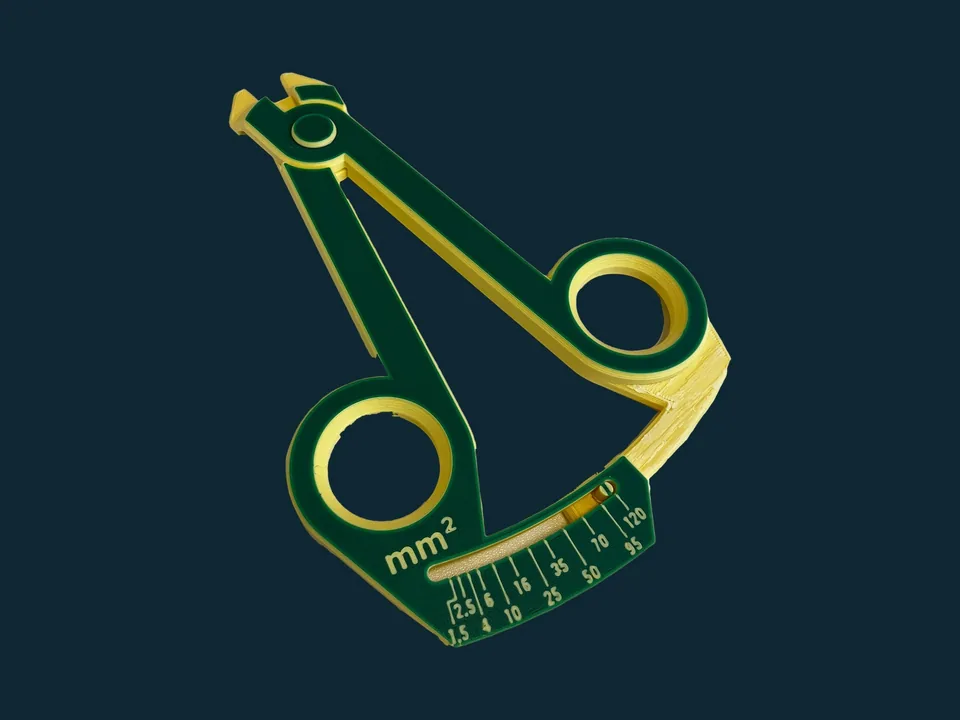
Electrical installation
A scissor-type cross-section gauge for electricians, for conductor cross-sections from 1.5 to 120 mm². The core or strand goes between the two blades; the cross-section is read off at the bottom. QuerLe checks cable cross-sections. It does not measure them.
Field problem → CAD → 3D print → series
View product →Tools
Design and collaboration are part of product development: browser review, Onshape, and handover as STEP, PDF or DWG.
You review and comment on 3D models and drawings via a secured link — a design review without a CAD license of your own.
Working prototypes from our own 3D printing in Filderstadt — iterations without a detour through a third party.
3D and 2D data ready for manufacture, in common industrial formats — ready for the workshop and for suppliers.
Where needed we check strength by FEM analysis directly in Onshape (German); working prototypes are 3D-printed, for example in the prototype of a drive wheel (German).
More on the method, in German: phases of product development,fixed price: cost and process,design for manufacture,CAD design, and having 3D-printed prototypes made.
FAQ
Short and factual — process, fixed prices, the partner model, data, rights and prototypes.
Technical product development from the problem to a working prototype: clarifying the idea and the requirements, concept and feasibility, CAD design, 3D-printed prototypes in our own workshop, and revision loops through to the pre-series prototype. Form and function — product design and engineering — belong together.
Startups and inventors with a product idea, and companies that want to develop a new product or part — without their own development department and without a CAD license of their own.
Phase 1 costs 1,450 € incl. 19% VAT (1,218.49 € net) as a fixed price and takes about 3–4 weeks. You receive a requirements specification, a solution concept with sketches, a parts list with sources of supply, a short report on risks, and a binding fixed-price quote for phase 2.
Phase 2 is also a fixed price, set after phase 1. As a guide: from about 5,000 € net plus VAT for companies, from about 5,950 € incl. 19% VAT for private individuals. The fixed price includes the material for the prototypes as quoted, and 2 revision loops. Payment is in three installments: at the start, after the first prototype, and on acceptance. Private individuals pay the first installment only after the first CAD status.
Because a fixed price can be planned.
For inventors and startups with a tight budget: in phase 2 you pay only material and external costs up front. In return, KANID receives a time-limited share of revenue after market launch. The terms are agreed individually and in writing after we have reviewed the project. For companies and founders who will market the product commercially.
Under the partner model that is agreed fairly in advance; on the classic path the fixed price applies.
STEP files and PDF drawings — the usual handover format, which any manufacturer can work with. Plus access to the Onshape project.
The idea and intellectual-property rights stay with the client. Work results transfer after payment, or under the conditions that were agreed.
No. Working prototypes are made on our own 3D printers in Filderstadt. Design and prototype stay in one pair of hands, and iterations do not detour through a third party.
No. You review and comment on 3D models and drawings via a secured Onshape link in the browser. Notes go directly on the model or the drawing — a design review without screenshots and PDF ping-pong by email.
Yes. KANID UG is at Heinrich-Hertz-Str. 11, 70794 Filderstadt, and provides mechanical development, design services and CAD design for technical products — in Filderstadt, the Stuttgart region and across Germany.
Yes. Where the design needs it, we check stress, deformation and the factor of safety by FEM analysis directly in Onshape — without a separate export into another simulation tool.
We design in Onshape and use built-in tools such as FEM analysis. Generative AI does not replace a design decision here; at most it can speed up day-to-day work. What comes first is sound geometry, manufacture, and the prototype.
Checklist
A free checklist for founders and small companies, on the way from a product idea to a prototype that can be manufactured. No email address required. The PDF is in German.
Next step
Describe your idea or the problem briefly — we reply on business days. KANID UG, Heinrich-Hertz-Str. 11, 70794 Filderstadt.